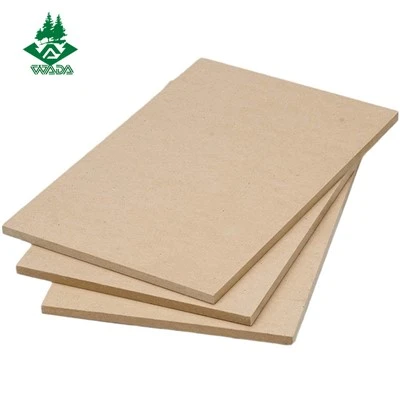
When discussing MDF (Medium Density Fiberboard) environmental standards, one of the most common questions is: Is there completely formaldehyde-free MDF?
The answer is no.
Even natural solid wood releases small amounts of formaldehyde, a naturally occurring organic compound. Therefore, the concept of "zero formaldehyde" MDF does not truly exist.
Instead, environmental standards focus on controlling formaldehyde emission levels within safe limits.
Why Formaldehyde Emission Matters
Formaldehyde emissions are a key factor in determining whether MDF is suitable for indoor applications, such as:
- Furniture manufacturing
- Interior decoration
- Cabinets and wardrobes
- Wall panels and partitions
To ensure safety, MDF products must meet specific emission standards defined by national or international regulations.
E1 Standard: The Basic Requirement for Indoor Use
According to current standards, MDF used for indoor applications must meet at least the E1 grade.
- E1 emission limit: ≤ 1.5 mg/L
If a board does not meet this requirement, manufacturers must apply additional treatments such as edge sealing or surface lamination to reduce emissions.
Today, E1 is considered the minimum acceptable environmental standard in many markets.
Higher Environmental Standards: E0, CARB P2, and F4 Star
With the advancement of production technology, more stringent international standards have been introduced.
E0 Standard
- Approx. ≤ 0.5 mg/L formaldehyde emission
- Significantly lower than E1
- Widely recognized as a higher eco-friendly grade
CARB P2 Standard (U.S.)
- Certified under the California Air Resources Board
- Uses a different testing method compared to E0
- Generally considered equivalent to E0 level
F4 Star Standard (Japan)
- One of the strictest standards globally
- Formaldehyde emission ≤ 0.3 mg/L
- Suitable for high-end indoor environments
These standards are commonly required in export markets, especially in North America, Europe, and Japan.
How to Choose Eco-Friendly MDF Board
When selecting MDF boards, buyers should focus on the formaldehyde emission grade rather than marketing claims.
Here are some practical tips:
1. Check Certification
Reliable suppliers should provide official certification such as:
- CARB P2 certificates
- SGS or TUV test reports
- Third-party inspection documents
2. Verify Product Markings
Most MDF boards have edge printing or labeling, indicating:
- Manufacturer name
- Emission grade (E1, E0, etc.)
3. Match Application Needs
- E1: Suitable for general indoor use
- E0 / CARB P2: Recommended for furniture and export markets
- F4 Star: Ideal for high-end or strict regulatory markets
Global Trends in MDF Environmental Standards
As global awareness of indoor air quality increases, demand for low-emission MDF boards continues to grow.
Buyers and importers are increasingly prioritizing:
- Compliance with international standards
- Verified certification
- Stable product quality
For exporters, offering MDF products that meet E0 or CARB P2 standards can significantly improve competitiveness in international markets.
Conclusion
Understanding MDF environmental standards is essential for selecting the right product for your market and application.
While E1 remains the basic requirement, higher standards such as E0, CARB P2, and F4 Star provide better environmental performance and broader market acceptance.
Choosing certified, low-emission MDF not only ensures compliance but also enhances product value in global trade.