The U.S. Department of Commerce has officially confirmed the continuation of anti-dumping (AD) and countervailing duty (CVD) orders on wood mouldings and millwork products imported from China, following the completion of its five-year sunset review.
According to the Federal Register notice issued on June 30, 2026, the duties will remain in effect from June 24, 2026, as both the U.S. Department of Commerce and the International Trade Commission (ITC) concluded that revoking the orders would likely result in continued or renewed dumping and material injury to the domestic industry.
This decision has significant implications for global suppliers, importers, and manufacturers involved in wood mouldings, millwork components, and related engineered wood products.
Products Covered Under the Duty Orders
The scope of the continued duties includes a wide range of wood-based products, such as:
Wood mouldings and profiled trim products
Finger-jointed and edge-glued moulding blanks
Laminated veneer lumber (LVL) mouldings
Interior millwork components
Door frames, jambs, stiles, rails, and casing sets
Architectural wood accessories and panel components
These products may be made from solid wood, bamboo, LVL, or composite materials where wood content remains dominant.
Even when products are coated, painted, primed, or further processed, they may still fall under the scope of the order if their core structure remains wood-based.
Trade Compliance Remains a Critical Factor
For exporters and importers, this continuation means that:
Anti-dumping duties remain active
Countervailing duties continue to apply
Cash deposits are still required at U.S. customs
Compliance requirements remain strictly enforced
In practical terms, this directly affects pricing structures, landed cost calculations, and supply chain planning for U.S.-bound wood mouldings and millwork products.
Companies engaged in cross-border trade must carefully evaluate:
✔ Product material composition
✔ Manufacturing process (finger-jointing, LVL, laminating)
✔ Finishing and coating processes
✔ HTS classification accuracy
✔ Country of origin documentation
Misclassification or unclear product scope may lead to customs delays or unexpected duty exposure.
Impact on Global Wood Product Supply Chains
The continuation of duties reflects a broader trend in global trade policy: increasing scrutiny of engineered wood products and construction materials.
For international buyers, especially in North America, this means:
Higher compliance costs
More complex sourcing decisions
Increased importance of supplier transparency
Stronger demand for alternative sourcing strategies
As a result, global procurement strategies are shifting toward suppliers that can provide:
Stable export documentation
Clear product classification support
Consistent quality control systems
Flexible manufacturing capabilities
How Wood Manufacturers Are Responding
In response to evolving trade policies, many wood product manufacturers are focusing on:
Diversifying export markets beyond the U.S.
Strengthening compliance and certification systems
Increasing value-added product offerings
Enhancing customization capabilities for different regions
Engineered wood products such as plywood, MDF, OSB, and particle board continue to play a key role in this transformation due to their wide application across furniture, construction, and interior industries.
Our Position in the Global Wood Products Market
As a professional manufacturer of engineered wood panels, we provide a stable and compliant supply chain for international buyers.
Our product portfolio includes:
Commercial plywood & furniture plywood
Film faced plywood for construction use
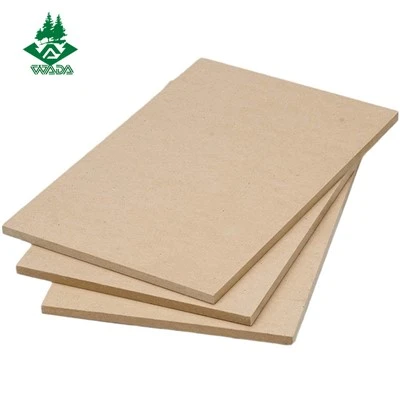
MDF & melamine boards
OSB structural panels
Particle board (E0 / ENF grade)
Customized wood-based solutions for furniture and construction
We focus on:
✔ Stable export documentation
✔ International certification compliance (FSC, CARB, EPA TSCA Title VI)
✔ Consistent quality control systems
✔ Flexible customization for global markets
While market conditions and trade policies continue to evolve, our commitment remains focused on delivering reliable, compliant, and cost-effective wood panel solutions for global customers.
Outlook
The continuation of U.S. duties on Chinese wood mouldings and millwork products highlights the ongoing complexity of global wood trade regulations.
For industry participants, the key takeaway is clear:
Trade compliance is no longer optional - it is a core part of supply chain strategy.
Companies that can combine manufacturing strength with regulatory awareness will be better positioned to succeed in increasingly structured international markets.
📩 Request a Quote
Looking for a reliable plywood, MDF, OSB, or engineered wood supplier?
Contact our team for product specifications, compliance support, and export quotations tailored to your market.