The Middle East infrastructure context: high-cycle shuttering
Major urban projects in the Gulf Cooperation Council (GCC) region, particularly in the UAE and Saudi Arabia, are characterized by their scale and the speed of their construction cycles. For projects like the Dubai Metro extensions, the shuttering system must be capable of rapid reuse. Contractors frequently specify high-performance systems from global leaders such as Doka or Peri, which rely on standardized 18mm or 21mm film-faced plywood as the primary contact surface.
The primary technical requirement in this context is predictable reuse. On a massive infrastructure site, the cost of the plywood is secondary to the labor cost of installation and the capital cost of the formwork system itself. If a board fails after only five pours when twenty were planned, the entire cycle is compromised. Publicly available specifications for high-end GCC projects often demand a minimum of 15 to 20 reuse cycles per side for premium birch or eucalyptus core panels.
The lesson for B2B buyers is that "cheap" shuttering boards often carry a hidden price in the form of site delays. The evidence in these large-scale projects shows that consistent panel thickness (often +/- 0.5mm) and high-density phenolic overlays (220g/m² or higher) are essential for maintaining the "fair-faced" concrete finish required by municipal authorities in the region.
Beyond "Waterproof": Surviving 50°C and 100% Humidity
While many suppliers label their products as "waterproof," the Middle East climate tests chemical and physical stability far beyond simple moisture resistance. A board that passes a boiling test in a laboratory may still fail on a Dubai construction site in July. The challenge is the combination of extreme thermal expansion and alkaline chemical attack from the wet concrete.
Thermal stability of the phenolic film. Under direct desert sun, the surface temperature of a dark brown formwork panel can exceed 70°C. Lower-quality films or inadequate bonding resins can soften, lead to "ghosting" on the concrete surface, or peel away from the wood core. High-cycle infrastructure projects utilize plywood bonded with 100% phenolic WBP (Water Boiled Proof) resin, which maintains its cross-linked structure even at these elevated temperatures.
Alkaline resistance. Concrete is highly alkaline. During the curing process, it can chemically degrade the wood fibers if the protective film is breached. The high-density overlays (HDO) or premium phenolic films (typically 120-240 g/m²) used in GCC bridge and stadium projects act as a chemical barrier, ensuring the wood core remains dry and structurally sound across multiple pours.
The ROI of reuse: calculating cycles and the role of edge sealing
In large-scale Middle East pours, the return on investment (ROI) of a plywood panel is directly tied to its longevity. A premium panel that costs 40% more than a budget alternative but provides 300% more reuse cycles is the more economical choice.
The critical role of edge sealing. Most formwork delamination begins at the edges. In the arid but occasionally humid environment of the Gulf, moisture ingress during the wash-down between pours causes the wood layers to swell. Publicly described best practices for regional projects emphasize the immediate re-sealing of any cut edges with specialized water-resistant acrylic paint. Without this step, even the highest-quality WBP glue cannot prevent localized expansion that ruins the panel's flatness.
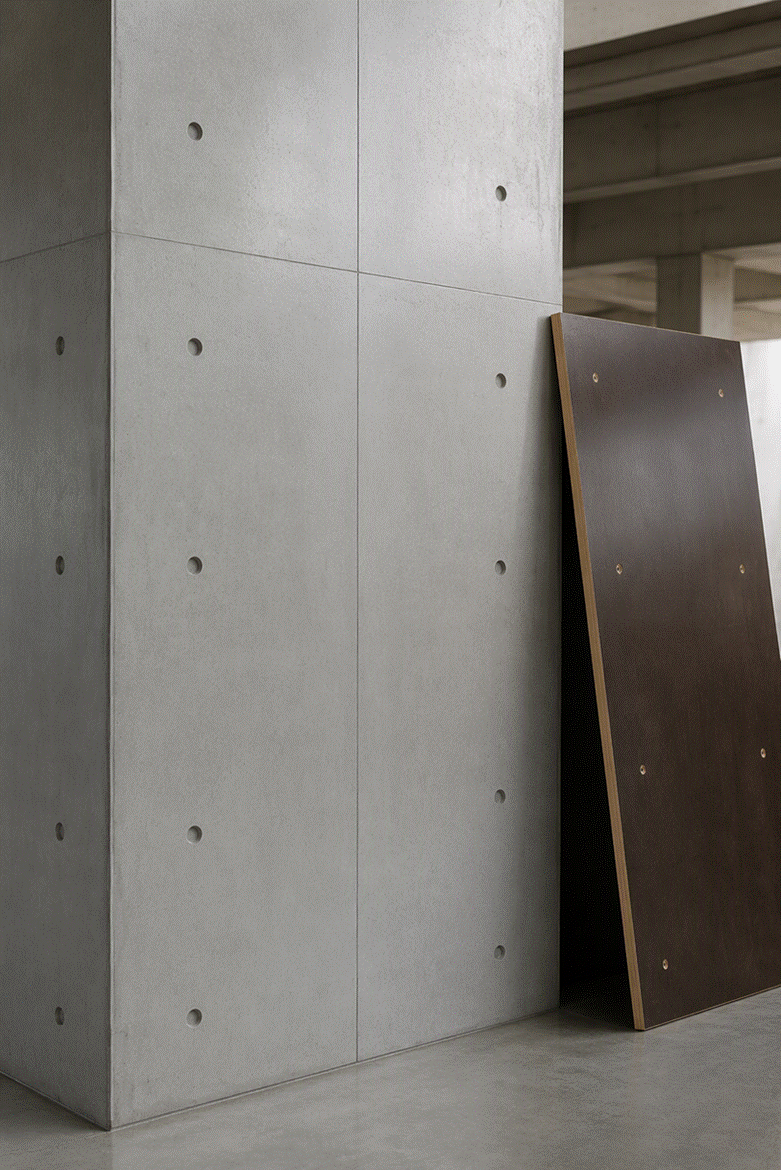
Surface finish and maintenance. The smooth, "mirror-like" finish seen on the pillars of the Dubai Metro is a result of consistent release agent application and the durability of the phenolic film. Buyers should specify the required concrete surface class (e.g., "fair-faced" or "exposed") to ensure the plywood grade matches the aesthetic requirements. A board that remains flat and smooth after 20 uses reduces the need for expensive post-pour grinding and plastering.
Sourcing and logistics: managing supply chains for the GCC
Sourcing for the GCC market requires a focus on documentation and logistics consistency. Importers in the UAE and Saudi Arabia typically look for suppliers who can demonstrate compliance with international standards such as EN 13986 or CE markings, as these provide a baseline for quality assurance.
Logistics and storage. Plywood arriving at ports like Jebel Ali or Jeddah must be managed to prevent moisture absorption or excessive drying before it reaches the site. Best practices for regional sourcing include:
Construction: Specify the exact core species (Birch, Eucalyptus, or Combi) rather than accepting a generic "hardwood" label.
Film Weight: For infrastructure, 220g/m² is often the standard for high-cycle slabs and walls.
Testing: Request independent test reports for bond quality (EN 314-2 Class 3) and moisture content (typically 8-12%).
Trial Pours: For major contracts, conduct a site-specific trial to verify the number of cycles achieved under local conditions before increasing order volume.
Conclusion: why system compatibility is your best sourcing strategy
The value of the Middle East formwork case is the shift from "buying boards" to "buying performance." Large-scale infrastructure projects succeed because the plywood is treated as a critical component of the overall construction system, matched to the heat, the humidity, and the required reuse cycle.
For a procurement team, the final checklist is simple but essential: specify the application, verify the chemical stability of the film under heat, and prioritize the total cost per pour over the initial sheet price. Before your next GCC project, ask your supplier to prove the reuse cycles of their panels under extreme heat-not just their waterproof glue in a cold lab.
Sources and editorial boundaries
[1] Vinawood - Formwork Plywood for GCC Construction.
[2] Yasu Trading - Film Faced Plywood: Construction Guide for the UAE.
[3] LinkedIn - Film Faced Plywood in Saudi Arabia: High-Quality Formwork.
[4] Plywood.cc - Shuttering Film Faced Plywood specifications.
[5] Doka - Multi-ply formwork sheets technical specifications.
[6] Hanson Plywood - Specification criteria for plywood performance.
Sources accessed on 23 September 2026. These pages established described capabilities and regional standards, not an independent audit of a specific company's performance. This article claims no supply relationship, site inspection, or measured project result. All illustrations are AI-generated and must retain their disclosure.