The World Customs Organization (WCO) states that HS 2022 is the current edition and that final import or export classification is made under the relevant national tariff schedule. It also directs businesses to the customs administration of the country concerned for product-specific classification assistance.
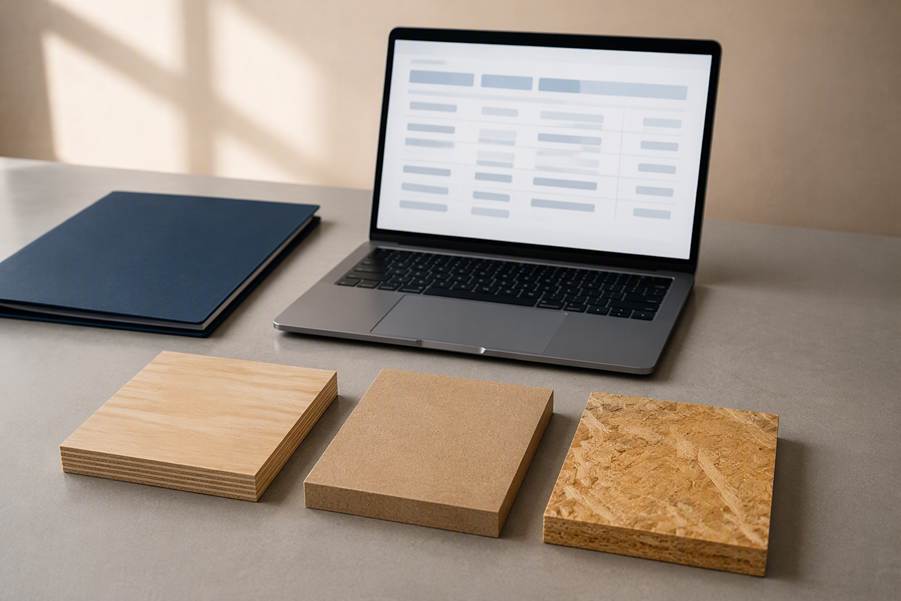
The three chapter-level directions to check first
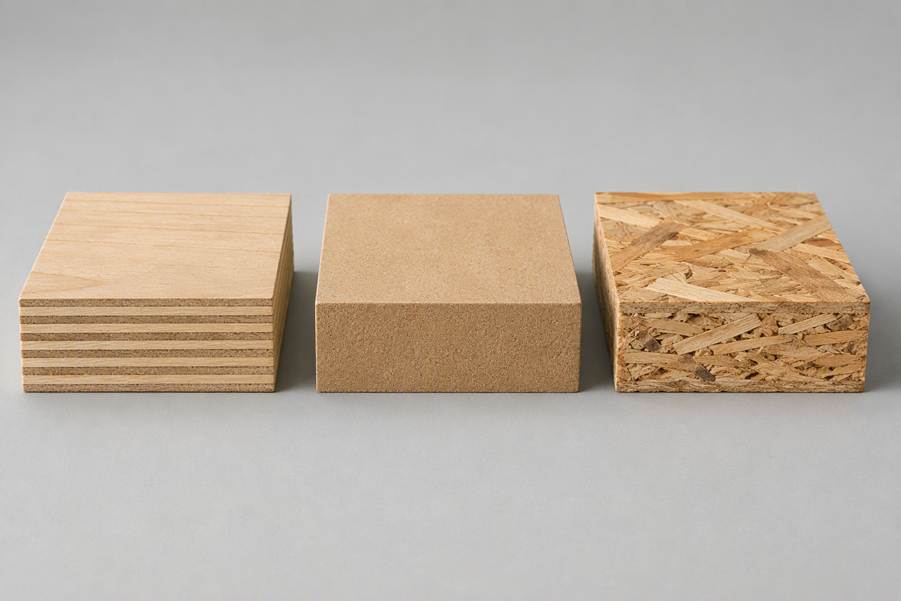
For common wood-based panels, the first classification discussion often moves toward three HS headings. These headings are directions for analysis, not a final eight- or ten-digit answer:
|
Product family |
HS heading to investigate |
Why the heading is only a starting point |
|
Particle board and OSB |
4410 |
The national tariff may split OSB and similar boards by construction, density, surface treatment, thickness or other factors. |
|
Fiberboard, including MDF |
4411 |
National subheadings can distinguish MDF by density, thickness, surface and other technical characteristics. |
|
Plywood and similar laminated wood |
4412 |
The tariff may require the wood type, ply construction, bamboo status, thickness or working state. |
WCO's Chapter 44 material identifies 4410 for particle board and oriented strand board, 4411 for fiberboard and 4412 for plywood, veneered panels and similar laminated wood. [2] The USITC's current HTS materials demonstrate why the next digits must be checked in the destination tariff: national schedules add detailed subdivisions, including MDF and plywood lines.
A 10-point checklist for avoiding classification errors
1. Identify the legal importer and destination
The same panel can face different national tariff subdivisions, duty rates, trade remedies or documentary requirements in different markets. Record the country of import, customs territory, entry type and importer of record before asking for a code.
2. Name the product by construction
Replace broad descriptions such as "wood board" with a factual product name: plywood, MDF, OSB, particle board or another panel. State how the board is made, not how it is marketed. "Furniture board" or "eco panel" is not enough for classification.
3. Record the raw material
For plywood, identify whether the panel consists of wood sheets and record the relevant wood species or tariff-relevant wood category. For MDF and OSB, document the fiber or strand structure and the binder information available from the technical file. Do not infer the construction from a photograph alone.
4. Describe the layer or strand arrangement
For plywood, document the number and thickness of plies, whether the panel is veneered or laminated, and whether any bamboo or non-wood layer is present. For OSB, state that the panel uses oriented strands only when the product documentation supports that description. These details may separate neighboring tariff lines.
5. Capture density and thickness
Create one consistent data sheet for nominal thickness, actual tolerance, dimensions, density or mass per volume where requested, and unit of measure. Thickness thresholds often appear in national tariff subdivisions; do not copy a threshold from one country's tariff into another country's declaration.
6. Describe surface treatment and working
Record film facing, painting, paper overlay, melamine, veneer, sanding, grooving, drilling, edge profiling, cutting to shape or other working. A panel that has been further worked may require a different analysis from a plain sheet. The product should be described as shipped, not only as it left the mill.
7. Separate product classification from end use
"Used for furniture," "used for formwork" or "used for packaging" explains commercial purpose, but end use does not automatically determine the HS heading. It becomes relevant when the tariff text or a classification decision refers to the product's form, construction or use. Keep the technical description primary.
8. Check the destination tariff-not only a supplier invoice
Use the importing customs authority's tariff database or an official tariff schedule. US importers, for example, must consult the HTS rather than stop at the four-digit heading; USITC records show detailed national lines under Chapter 44. EU importers should check the applicable EU tariff system and any current measures; other markets require their own national source.
9. Build an evidence pack before filing
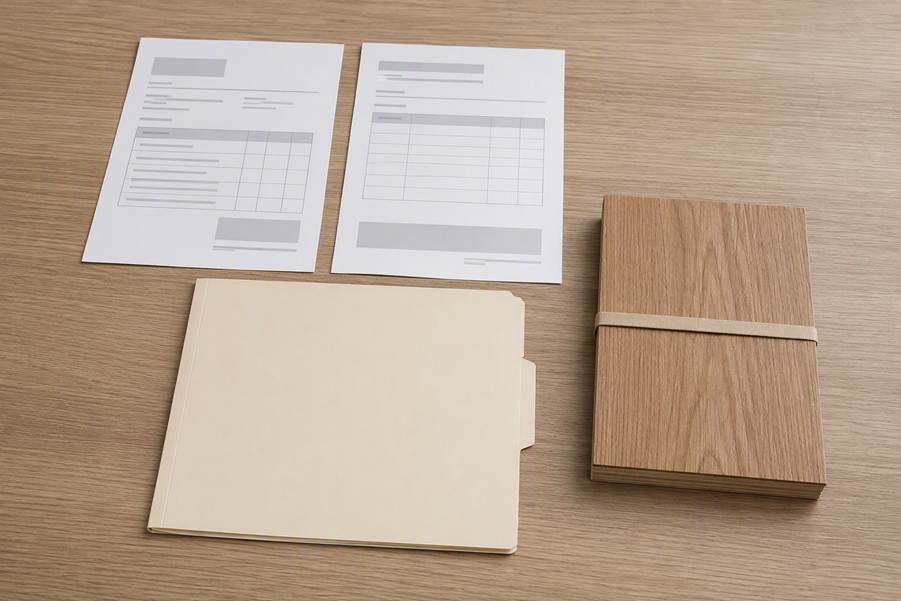
Keep the commercial invoice, packing list, technical datasheet, product photographs, construction description, dimensions, density information, treatment details and any test or classification correspondence together. Make sure the documents describe the same product and shipment. A mismatch between invoice wording and the datasheet can create avoidable questions at entry.
10. Escalate genuine uncertainty before shipment
If two possible tariff lines remain, ask the customs broker or the importing country's customs administration for a product-specific view. For a recurring or high-value product, consider the destination authority's advance-ruling process where available. WCO itself does not issue private-sector tariff classifications; its guidance is to contact the relevant national customs administration.
Three red flags that should stop an automatic code copy
Red flag one: "Use this code for all countries." HS is harmonized to six digits, but national schedules extend and apply it locally. A code that works in the United States is not automatically the correct code in the EU, Canada or another market.
Red flag two: "The product name is enough." Plywood, MDF and OSB are families, not complete declarations. Missing thickness, density, construction, wood category or surface treatment can change the analysis.
Red flag three: "The code is on an old invoice, so it is approved." Historical use is evidence of past practice, not a binding decision for every future product, importer or tariff edition. Recheck after a tariff revision or product change. A changed coating, new core species, different thickness range or revised destination can alter the facts on which the earlier classification was based. Treat the code as a documented conclusion tied to a product specification, not as a permanent label attached to a supplier or product family.
Final buyer checklist
Before the commercial invoice is finalized, confirm: destination country, exact construction, raw material, density and thickness, surface and working state, supported end use, national tariff source, consistent evidence pack and broker or customs review where uncertainty remains. This approach is slower than copying a code from a quotation, but it is far faster than correcting a declaration after shipment.
For recurring imports, maintain a product classification file for each panel family and update it when the supplier changes the core, surface, dimensions, processing or destination market.
Sources and editorial boundaries
[1] World Customs Organization - Harmonized System FAQ. WCO explains the six-digit structure, identifies HS 2022 as the current edition, and states that final national classification is handled under the relevant national tariff schedule.
[2] WCO - Chapter 44, Wood and Articles of Wood. Used here for the chapter-level descriptions of headings 4410, 4411 and 4412. Check the current HS edition and local tariff for filing.
[3] USITC - Harmonized Tariff Schedule, Chapter 44. Used as an example of national tariff subdivisions, not as a global tariff answer.
Sources accessed on 28 September 2026. This article is educational content, not customs, legal or tax advice. No single tariff code is presented as universally valid. The three illustrations are AI-generated concepts and must retain their captions when reused.