


Hey there! I'm a supplier of marine plywood, and I often get asked how this type of plywood manages to resist termites. Well, let's dive right into it and break down the science behind it.
First off, what exactly is marine plywood? It's a high - quality plywood specifically designed for use in wet and humid environments, like boats and docks. Unlike regular plywood, marine plywood is made with waterproof glue and high - grade veneers. These features not only give it excellent strength and durability but also play a crucial role in termite resistance.
The materials used in marine plywood are a big factor in its termite - fighting abilities. Most marine plywood is made from hardwoods like birch. Hardwoods are denser than softwoods, which means they are much tougher for termites to chew through. Termites have to work extra hard to penetrate the dense fibers of hardwood, and in many cases, they just can't be bothered. It's like trying to eat through a brick wall when there are easier snacks around.
Another important aspect is the treatment process. Marine plywood often undergoes chemical treatments to enhance its resistance to pests and decay. These treatments can include borates, which are natural minerals that are toxic to termites. When termites come into contact with borate - treated wood, it disrupts their digestive systems and eventually kills them. The borates are absorbed into the wood fibers, creating a protective barrier that keeps termites at bay.
The manufacturing process of marine plywood also contributes to its termite resistance. The veneers are tightly bonded together using waterproof glue. This creates a solid and seamless structure that termites find difficult to infiltrate. There are no gaps or weak spots where termites can easily gain entry. In contrast, regular plywood may have gaps between the layers, which termites can exploit.
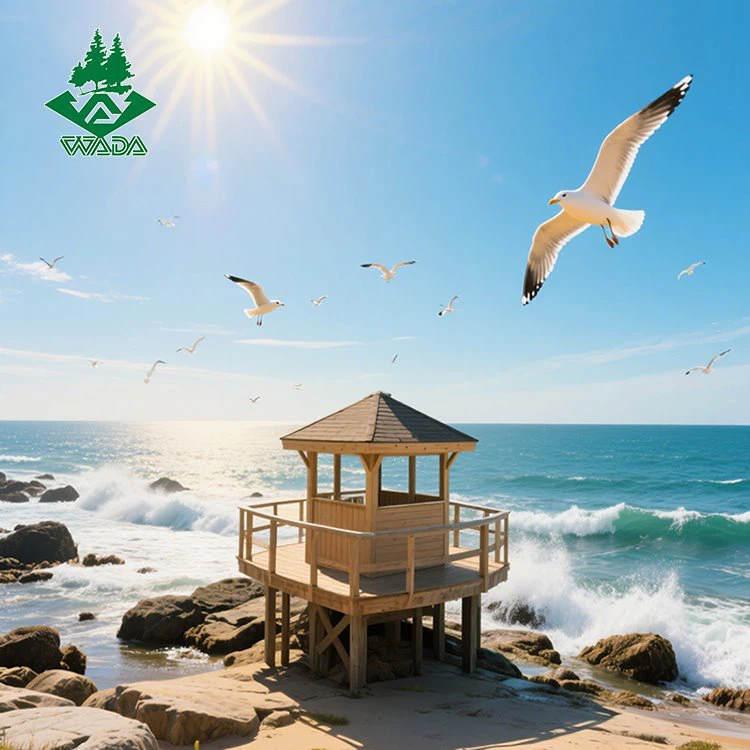

Let's talk about the environment. Marine plywood is often used in areas where the conditions are not very termite - friendly. For example, in marine applications, the constant exposure to water and salt can be a deterrent for termites. Termites prefer dry and warm environments, and the wet and salty conditions of a boat or dock are not ideal for them. Even if a few termites do manage to find their way onto the marine plywood, the harsh environment makes it difficult for them to establish a colony.
Now, I know you might be thinking, "But what if termites do manage to get through?" Well, the good news is that marine plywood is designed to withstand some level of damage. Its high - quality construction means that even if a small area is affected by termites, the overall integrity of the plywood remains intact. And because of its resistance, the damage is usually minimal and can be easily repaired.
If you're in the market for marine plywood, we've got some great options. Check out our 4x8 Marine Plywood and Marine Plywood 4x8. These are standard sizes that are widely used in various applications. And for those who need a thicker and more durable option, our 18mm Wbp Birch Plywood Waterprood Plywood is a great choice.
Whether you're building a boat, a dock, or any other structure that needs to stand up to the elements and termites, marine plywood is the way to go. It offers a combination of strength, durability, and termite resistance that you won't find in other types of wood.
If you're interested in purchasing marine plywood for your project, I'd love to have a chat with you. We can discuss your specific needs, the best type of plywood for your application, and get you a great deal. Don't hesitate to reach out and start the conversation.
References
- "Wood Handbook: Wood as an Engineering Material" by the Forest Products Laboratory
- "Termites and Their Control" by the University of Florida Institute of Food and Agricultural Sciences


